|
. |
A pilgrimage to the ancient civilization and first Christian
communities in Greece where St. Paul preached, presented as a fly&drive
itinerary with two options:
ON THE STEPS OF ST. PAUL
DURATION: 5-7 DAYS
-
 1st
day: Day in Athens exploring the city.
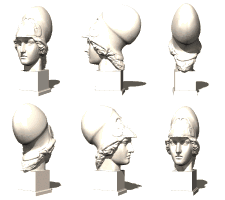
Acropolis with Parthenon the
greatest monument of antiquity, dedicated to the goddess Athena, Erechtheum with
the beautiful six Caryatids and then to Areopagus (Areios Pagos = Hill of Ares)
visited by Pope John Paul ll, same hill where St. Paul gave his famous sermon of
"Unknown God". You may also visit the ancient Agora that was the commercial and
religious centre of the life of Athens. 1st
day: Day in Athens exploring the city.
Acropolis with Parthenon the
greatest monument of antiquity, dedicated to the goddess Athena, Erechtheum with
the beautiful six Caryatids and then to Areopagus (Areios Pagos = Hill of Ares)
visited by Pope John Paul ll, same hill where St. Paul gave his famous sermon of
"Unknown God". You may also visit the ancient Agora that was the commercial and
religious centre of the life of Athens.
- 2nd day: Drive up north to Thessaloniki (about 6 hours) the second
largest city in Greece and capital of the province of Macedonia. It was here in
the synagogue that Paul "...reasoned with the Jews and the God-fearing
Greeks..." (Acts 17:17). Overnight in Thessaloniki.
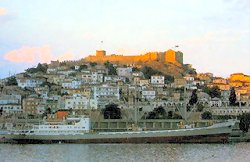
- 3rd day: Leave Thessaloniki and trace the footsteps of Paul along the
northern Aegean coast to Kavala, which occupies the site of ancient
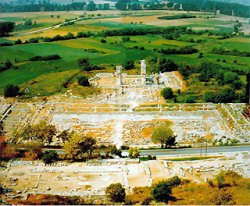
Neapolis, and Philippi (Acts 16:12-40, Phil.), that today lies as a major
archaeological site near Krinides, where St. Paul and St. Silas were imprisoned
after St. Paul’s first sermon in what we today call Europe. Here he meet with
the women named Lydia form Thyatira (Rev.2: 18-29 and Acts.16: 14 -15) who
became first convert. Luke the Evangelist is also said to have come to Kavala on
his travels from Troas. After visiting the ruins of the great Acropolis, the
Market Place, Theatre and Forum drive back to Thessaloniki.
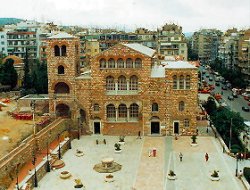
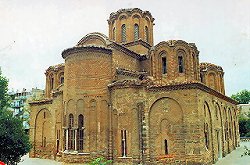
- 4th day: In the morning have a tour of Thessaloniki (St. George
Church, the Galerius Arch, St. Demitrius -the most beautiful basilica in the
city-, the Church of Aghioi Apostoloi -Holy Apostles-). In the early afternoon
drive back to Athens.
- 5th day: Leave Athens for
Corinth, one of the oldest towns of Greece, where St. Paul came after he
left Athens and where he remained for one and a half-year. It was here that Paul
stayed and worked with Aquilla and Priscilla in A.D. 52 as recounted in Acts 18
and his Letters to the Corinthians. Visits may include local temples, an
archaeological museum, the Bema and the marketplace. Return and overnight in
Athens.
Instead of returning directly to Athens from Thessaloniki (on the 4th day)
you could add visits and overnights in Kalambaka (Meteora) and/or Delphi:
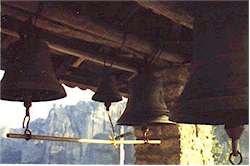
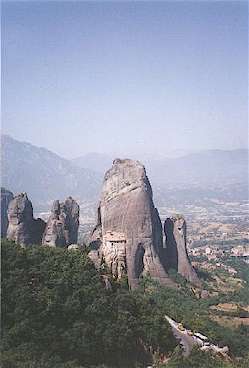
- Meteora: After early morning departure from Thessaloniki drive along the
beautiful coast and then through the valley towards Kalambaka and
Meteora, among the most
beautiful Byzantine monasteries. The word Meteora means literally "hovering in
the air" as all the monasteries were built on top of the high rocks. First monks
have lived here in the caves, already in 11th century. The Church of the
Transfiguration is the best known of the Monasteries and is built upon the
highest rock. Founded by Athanasios the Meteorite, well-known figure in Orthodox
monasticism. Construction of this monastery started in 1382 and it has priceless
religious treasures as Byzantine murals, icons etc. Overnight in Kalambaka.
-
Delphi:
Early morning departure to the central part of Greece. Visit the medieval
monastery named Ossios Loukas, (Saint Luke) and the chapel of Saint
Barbara dating to 800 AD. and then continue to
Delphi. In ancient times Delphi
was considered to be the center of the known world, where man was closest to God
and the place where heaven and earth met. Mythology holds that Delphi was the
meeting place of two eagles, released by Zeus and sent in opposite directions
where they later met indicating the center of the earth. Visit the
archaeological site and the museum. Overnight in Delphi.
|



 On the Steps